
In dense urban environments, the high concentration of people and growing data consumption – particularly with AI – present challenges for macro networks, which are largely made up of traditional solutions such as towers and rooftops. These are often not sufficient to deliver capacity and connection quality for so many simultaneous users. Network densification becomes necessary through better-distributed infrastructures that are closer to users.
Furthermore, smaller infrastructures can serve as coverage alternatives where traditional solutions are complex to deploy, due to land unavailability, licensing challenges or rental costs.

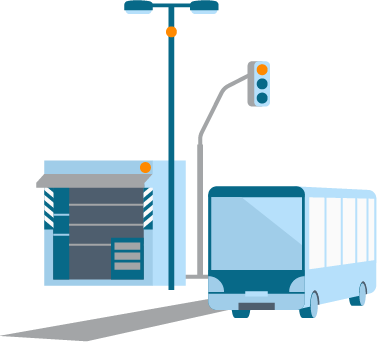
SLS – Street Level Solutions consist of small antennas and radios, typically installed on urban furniture such as poles, bus stops, building facades and traffic lights, to bring coverage and capacity closer to users, especially in dense urban areas.

QMC was one of the first neutral hosts to develop Street Level Solutions in the region, accumulating hands-on experience in deploying low-height networks integrated into urban furniture.

We have first-class in-house engineering with deep expertise in mobile network planning. We understand the logic behind carrier expansion and know how to design solutions that structurally address coverage and capacity challenges — a significant differentiator compared to purely real-estate-based models.
We have agreements and partnerships that provide access to more than 50 million urban furniture points in the region, including poles, totems and strategic structures in high-demand areas. This capillarity expands technical feasibility and accelerates project implementation. We maintain an active strategy of expanding and consolidating partnerships with urban infrastructure, constantly increasing the geographic availability of eligible SLS deployment points.


QMC has proven technical knowledge and experience in construction and maintenancein of fiber optic networks, an essential element to ensure capacity, scalability and performance in SLS solutions.
We operate in environments with a high level of regulatory requirements, including historic districts, areas with municipal restrictions and high-density regions. Our licensing expertise reduces risks and increases execution predictability.
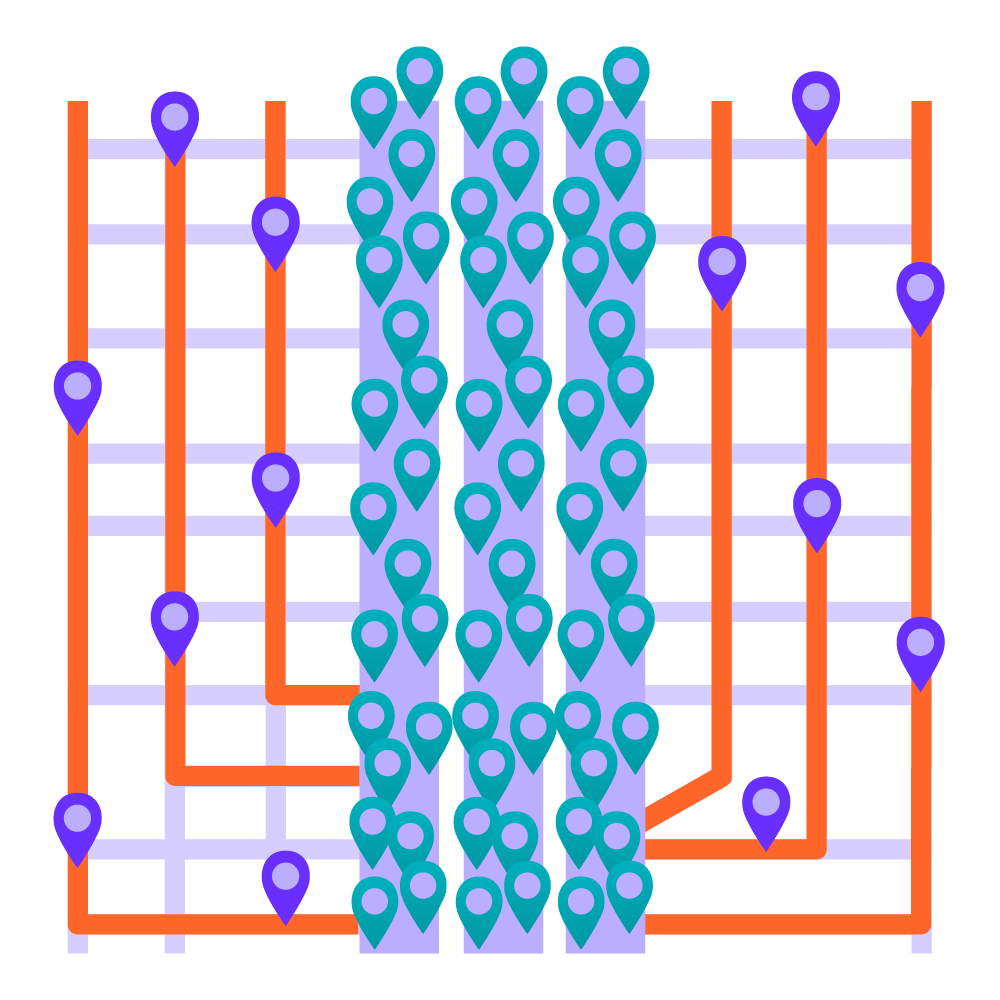

We have agreements and partnerships that provide access to more than 50 million urban furniture points in the region, including poles, totems and strategic structures in high-demand areas. This capillarity expands technical feasibility and accelerates project implementation. We maintain an active strategy of expanding and consolidating partnerships with urban infrastructure, constantly increasing the geographic availability of eligible SLS deployment points.
Energy and public lighting utilities
points
Media Out of Home
exclusive rights over 21,000 bus stops in São Paulo city
Facades
commercial properties
Yes. All QMC SLS systems are 100% licensed from an infrastructure perspective. QMC has a team of regulatory experts who ensure that its SLS installations are properly licensed with municipal authorities.
Yes, they are 100% compatible. Through the implementation of SLS systems, we prepare wireless carriers and the cities in which they operate for the new demands that 5G will bring. Our SLS systems not only provide greater speed and more reliable cellular connections, but they also enable greater security.
QMC is 100% responsible for the preventive and corrective maintenance of its SLS systems. QMC responds to calls regarding outages 24 hours a day, 7 days a week, and ensures its systems are within the scope of previously established SLAs.
SLS is a type of telecom infrastructure that permits telecommunications equipment to be installed at the street level using urban furniture. Small cells are one of the types of equipment that can be installed within an SLS architecture. SLS designs can be easily adapted and allow for a number of options in terms of network topology (CRAN, DRAN, oDAS, etc.). Consult our experts for more details.